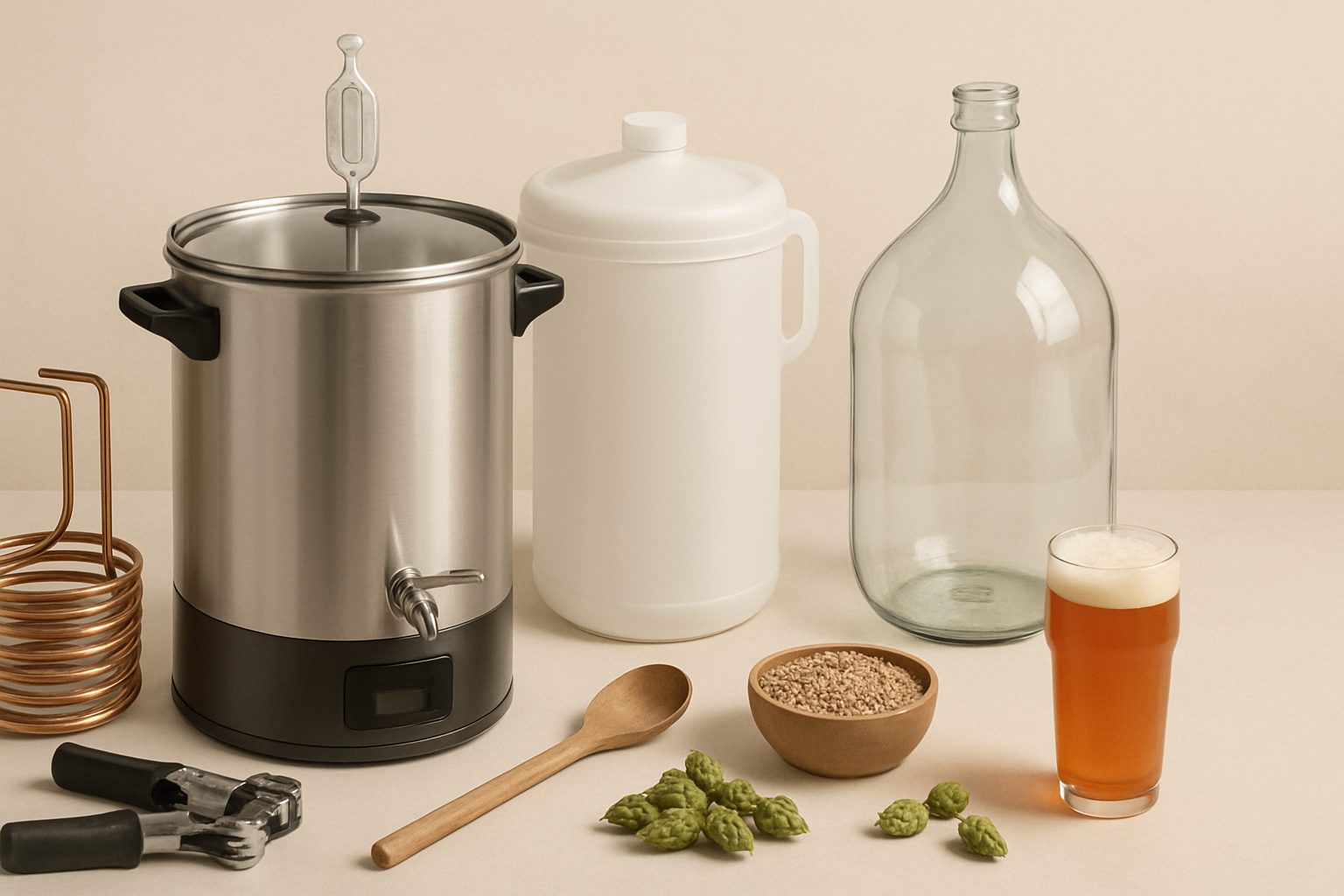
Best Electric Home Brew Kettles UK 2025: From Budget Boilers to Smart Systems
Electric kettles designed for home brewing are not the same as domestic kitchen kettles. When you're heating 20-30 litres of wort, you need wattage that actually delivers heat quickly, temperature control that holds a stable strike water temperature, and build quality that won't degrade under repeated brewing cycles. The right kettle cuts your brew day down by 30-45 minutes and prevents temperature swings that compromise your mash.
Why wattage matters more than you think
Most UK electric kettles sit between 2,000-3,000 watts. For home brewing, wattage directly affects heating speed. A 3,000-watt kettle heats 25 litres from cold to 68°C in roughly 30 minutes. A budget 2,000-watt model takes 45 minutes or longer. That's not a trivial difference when you're timed-blocking your Saturday.
More importantly, higher wattage maintains temperature stability when you add cold grain during the mash-in. A robust 3,500-watt unit recovers temperature loss faster, meaning fewer temperature fluctuations that disrupt enzyme activity and lower your efficiency.
One caveat: UK domestic circuits run on 13A fuses. Standard 13A plugs on kettles rated above 3,000 watts may trip older house circuits under sustained load. Check your brew space's electrical setup before committing to the highest-wattage options. Many brewers in older properties work safely with 2,800-3,000 watt kettles to avoid nuisance trips.
Stainless steel vs aluminium
Budget kettles often use thin aluminium bodies because it's cheap to form and conducts heat quickly. Stainless steel costs more but resists corrosion from mineral-heavy water and acidic cleaning agents you'll use between brews. For long-term ownership—three to five years of regular brewing—stainless steel holds its interior finish and resists pitting.
That said, quality aluminium kettles perform fine and cost less upfront. If your water is soft and you're disciplined about cleaning immediately after use, you'll see minimal degradation. The trade-off is simple: pay now (stainless) or pay later (replacing an aluminium kettle that's developed rough patches after 18 months).
Capacity: the practical floor
Typical home brewing systems need a minimum 25-litre kettle. A 20-litre kettle will technically work, but you're left with no headroom for boil-overs, no margin for water lost to evaporation, and no flexibility if you decide to brew a slightly higher gravity beer.
Conversely, a 50-litre kettle is overkill for most home setups. Larger kettles take longer to heat, take up more space, and are awkward to handle when full. Stick to the 25-40 litre sweet spot. Many brewers opt for 30-35 litres as a practical middle ground that handles most recipes without excessive heating time.
Temperature control features
Budget kettles have no temperature display—you're using a separate thermometer and hoping. Mid-range models (£80-150) often include a basic dial thermometer in the kettle wall. Better units have digital displays and a thermostat that holds temperature within ±2°C. The finest options offer dual-purpose designs that heat strike water on a timer, pause when you reach mash temperature, then resume for the boil.
However, dial thermometers on kettles frequently drift after 12-18 months of thermal cycling. An independent digital thermometer (£15-25) remains accurate long-term and is essential backup anyway. Don't overvalue built-in displays—prioritise getting your heating speed and capacity right first.
Spout and valve design
A tight-fitting lid keeps debris out during extended mash rests. A dip tube (intake pipe running to the kettle base) ensures you're drawing water from the hottest part of the kettle. A ball valve or tap near the base lets you drain into your mash tun without pouring.
Budget kettles skip these. You'll be tipping and ladling, which is slower but works. Mid-range and premium models include at least the ball valve. The very best have wide-mouth openings for easy cleaning—dried grain bits lodge in narrow spouts, and scrubbing them out is tedious.
Real-world considerations
Your brew space matters as much as the kettle itself. A kettle in an unheated garage loses temperature faster than one in a kitchen. Kettles with lids and insulation jackets (basic wrap-around covers) minimize this problem—you're adding maybe £20-40 to the purchase price.
Cleaning is also underrated. Kettles used several times monthly will accumulate mineral scale inside. Citric acid or commercial brewing cleaners shift this, but alkaline water areas (much of the South East) see heavier buildup. White plastic-lined kettles make scale visible and are easier to inspect during cleaning. Unpainted steel requires you to trust it's clean, which is less satisfying.
Finding the balance
For someone starting out: a basic 2,800-3,000-watt stainless steel 30-litre kettle with a ball valve costs £60-100 and will last several seasons. You'll add external thermometers and controls incrementally.
For someone already established in the hobby: a 3,500-watt premium unit with temperature controls and insulation might cost £200-300 but saves real time over a five-year ownership span. It's also less likely to develop leaks or thermal fatigue failure.
The most honest advice is this: the kettle matters far less than your water chemistry, grain quality, and timing. A £70 basic unit delivers the same wort quality as a £400 smart kettle if you're measuring and controlling temperature independently. You're really paying for speed and convenience above the baseline.
More options
- Grainfather G30 All-in-One Brewing System (Amazon UK)
- Brewzilla 35L All-in-One Electric Brewing System (Amazon UK)
- Home Brew Starter Kits (Amazon UK)
- Cornelius Keg & Home Draught Dispenser Systems (Amazon UK)
- Conical Fermenters & Fermentation Equipment (Amazon UK)